When Port Aransas still smelled like bait, salt, and sunburn.
A sentimental look back at fishing, family, ferries, crab nets, and the little coastal town that raised part of us.
Some families had lake houses. Some had deer leases. Some had Sunday dinners where everybody sat properly and used the right fork.
Our family had Port Aransas.
And thank goodness for that, because a kid can learn a lot more from a crab net, a stringer of fish, and a father with sand on his feet than he ever will from sitting still in somebody’s formal dining room.
I was brought to Port Aransas when I was one year old, too young to know where I was, but apparently old enough for the island to get into my blood. My siblings and I grew up in Waco, and Port Aransas was the place we could count on seeing at least once every summer. That trip from Central Texas to the coast felt like a pilgrimage. The farther south we drove, the flatter the land became, the saltier the air seemed to get, and the more restless the kids became in the back seat.
By the time we reached the ferry, we were already halfway transformed. Waco was behind us. School was behind us. Shoes were practically optional. The ferry ride was the final crossing into freedom.
Sometimes our cousins from San Antonio came too, which made everything louder, funnier, and more chaotic in the best possible way. More kids meant more tangled fishing lines, more sandy towels, more arguments over who got the good sleeping spot, and more stories that would get better every time they were retold.
My father took us fishing, crabbing, and flounder gigging, and he taught us all of it. He taught us how to bait a hook, how to work a crab line, how to watch the water, and how to gig flounder under the beam of a light when the whole world seemed dark except for the sandy bottom below us. He did not just teach us how to catch things. He taught us patience. He taught us tides. He taught us that fishing was never really just about fish.
It was about being together.
Back then, Port Aransas was still very much a little fishing town. Not a “brand.” Not a “coastal lifestyle destination.” Not a place where half the vehicles looked like golf carts wearing jewelry. It was simple, salty, and honest. You came across the ferry, and it felt like you had crossed into another world. The air changed. The pace changed. Adults loosened up. Kids ran wild. Nobody cared much if your shirt matched your shorts, because by noon everything was covered in bait, sand, or melted popsicle anyway.
We had family roots all over that island. Aunts, uncles, close friends, and even one of our grandfathers had cottages — real cottages, not “beach residences” — on Avenue F and Channel View Drive. Those houses had character. They had screen doors that slapped shut, sandy floors no broom could defeat, and porches where grown-ups told stories while kids listened just close enough to catch the good parts.
My grandfather came from San Antonio and built a cuddy cabin from a kit. Think about that for a minute. Today, folks spend half a day deciding which stainless cupholder package they want on a boat. He built the boat.
And he fished it.
He loved targeting gafftop, and from what I remember, he was good at it. Gafftop may not be the glamour fish of the coast, but do not tell that to a man who knows where they are and how to catch them. Besides, there is something wonderfully Port Aransas about respecting the fish other people overlook. That was the way of the old island. You did not need a hero shot with a giant offshore tuna to have a good day. A mess of fish, a cooler of drinks, and somebody exaggerating the size of the one that got away was plenty.
We fished the jetties during the day, climbing over those granite rocks like mountain goats with tackle boxes. Of course, we were not graceful mountain goats. We were kids carrying rods, bait buckets, and just enough poor judgment to make every outing memorable. Somebody was always slipping, scraping a knee, tangling a line, or yelling, “I got one!” when what they actually had was the bottom.
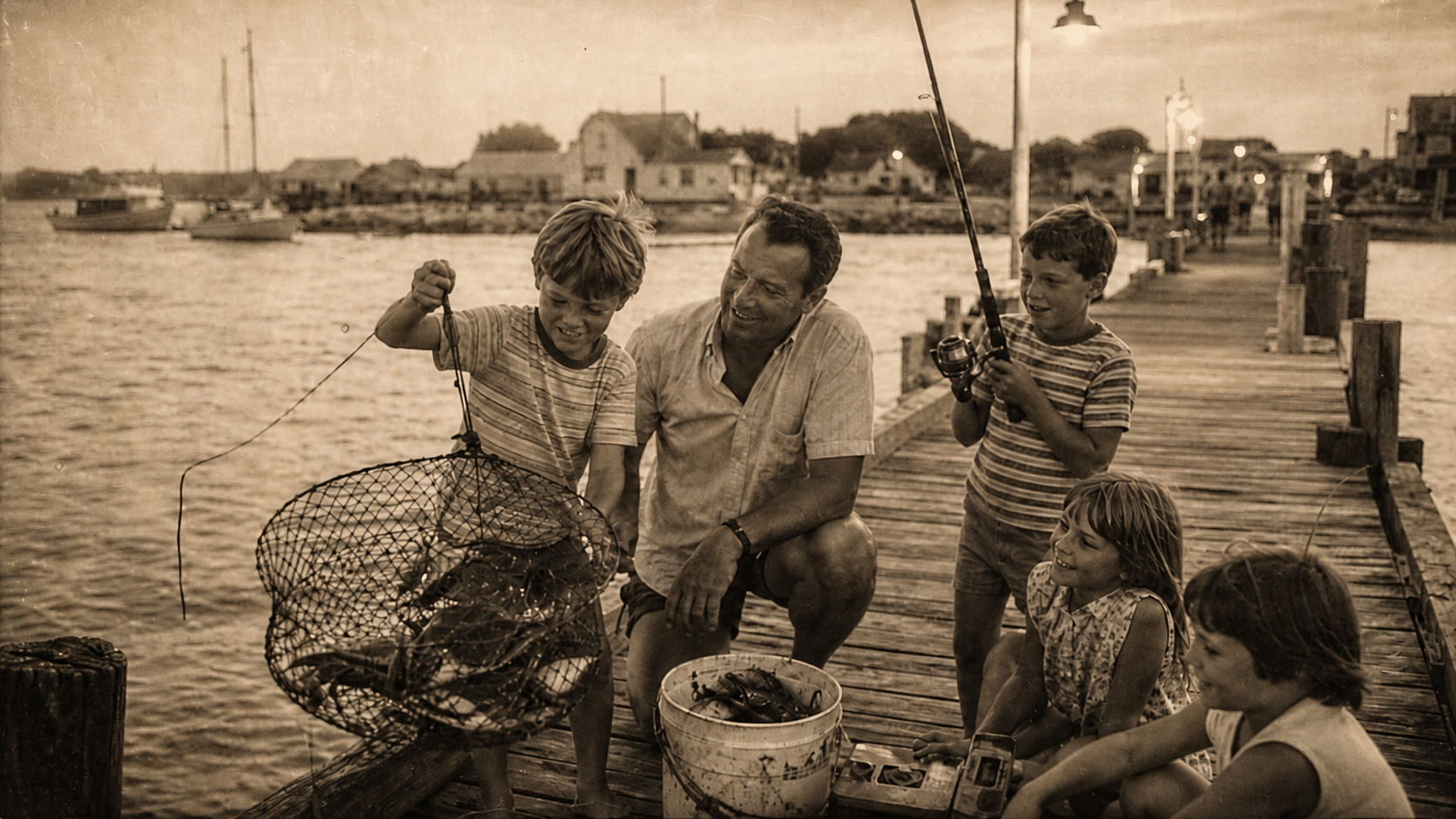
At night, we fished the piers. That was a different kind of magic. The lights glowing over the water. The sound of reels clicking. The dark shapes of fish moving below. The older folks seemed to know things just by looking at the tide, the wind, or the moon. Kids mostly knew that if you stayed awake long enough, somebody might hand you another soda and let you keep fishing.
And then there were the crab nets.
When we fished the piers at night, we would tie chicken necks to round crab nets and lower them into the dark water. Then we waited.
Or at least we were supposed to wait.
I am sure I checked mine far too often. Patience is a virtue, but it is not one commonly found in a kid holding a crab net rope under pier lights. Every few minutes I would pull mine up, convinced this was going to be the big haul. Sometimes it was empty. Sometimes there would be one crab hanging on like he had made a serious mistake. And sometimes that net would come up heavy with blue crabs, claws raised, legs scrambling, all of us hollering like we had struck oil.
We caught a lot of crabs that way. Real crabs. Honest crabs. Crabs that came home with us and went into the pot. The smell of those fresh crabs cooking was fantastic — salty, sweet, and rich with the kind of memory you cannot recreate from a grocery store seafood counter. There was nothing like eating something you had pulled from the water yourself just hours earlier.
We also combed the surf at the beach for crabs between beach markers 12 and 18, moving through the water like treasure hunters. A crab in the net felt like victory. A crab loose in the bucket felt like entertainment. A crab loose near your toes felt like a full-blown emergency.
Of course, not every seafood feast at home came with a perfectly honest origin story.
Our dads were not always as successful at shrimping or fishing as they may have suggested when they pulled back into town. But they were resourceful men, and resourcefulness is an underrated fishing skill.
Sometimes, if the fishing was slow, arrangements were made.
We kids knew — or at least suspected — that a little beer had occasionally been traded with shrimpers out in the Gulf for shrimp that somehow became “our catch” by the time we got home. Other times, fish from the market may have been quietly recruited to fill out the cooler. Nobody said too much about it. The official story was simple: the men went fishing, and seafood came home.
And if we kids kept quiet and did not tell our mothers about any creative seafood accounting, there might be a treat in it for us.
Looking back, I have to respect the whole operation. The dads protected their reputations. The moms got fresh seafood. The kids got treats. The shrimpers got beer. Everybody won.
That was Port Aransas, too — not just the fishing, but the stories around the fishing. The truth, the exaggeration, the harmless little cover-ups, and the laughter that came with all of it.
Later, when I lived in San Antonio myself, Port Aransas became easier to reach. It was no longer the long haul from Waco. It was close enough to call my name more often, and I answered whenever I could.
In those days, I would camp right on the beach. Nothing fancy. Just sand, wind, salt, and enough gear to convince myself I was prepared. Eventually, I upgraded to a popup camper, which felt like luxury at the time. Compared to sleeping in a tent with sand in every zipper, a popup might as well have been a beachfront resort.
Those trips had their own rhythm. Wake up with the sun. Make coffee that always seemed to have a little grit in it. Fish when the conditions looked right. Sit under whatever shade you could create. Rinse off only enough sand to pretend you were clean. Then fall asleep to the sound of the surf, knowing you had somehow ended up exactly where you were supposed to be.
And then there were the bait shops.
Bilmore’s and Woody’s were not just places to buy bait and tackle. They were part of the ritual. You walked in and smelled shrimp, fish, salt, rubber boots, old wood, and possibility. There were lures on the wall that looked like they could catch anything from a trout to a submarine. Adults talked fishing reports. Kids stared at tackle they did not need but desperately wanted. Somebody always knew where the fish were biting, though whether they told the truth was another matter entirely.
Those old places helped define Port Aransas. They were not polished, and that was the point. You did not go there for atmosphere. You went there because they had bait, tackle, ice, advice, and maybe a little gossip if you listened closely enough.
Now, of course, Port Aransas has changed.
Boy, has it changed.
The little fishing town of our childhood now has more vacation rentals, bigger houses, more restaurants, more traffic, more golf carts, more construction, and more people trying to discover the “hidden gem” that was apparently hidden right under our bare feet the whole time. The old cottages have been replaced in many places by tall, shiny homes with balconies, outdoor kitchens, and names like Salt Therapy, Beach Please, or License to Chill. I am not judging. Well, maybe a little.
Where there were once modest fish camps and weathered porches, there are now resort-style communities, luxury homes, and second-home neighborhoods. The island has grown, and with that growth has come both progress and loss.
That is the complicated part.
The growth has brought good things. Better places to eat. More lodging choices. More ways for families to enjoy the island. More people falling in love with the same beach, water, birds, boats, and sunsets we loved long before Port A had so many souvenir T-shirts telling everyone to “Live Salty.”
But something has been lost, too.
You can still find the old Port Aransas, but you have to look harder for it. It is not always sitting right there on the surface anymore. Sometimes it is tucked behind a new building, hidden under a coat of fresh paint, or carried in the stories of people who remember when fishing reports mattered more than real estate listings.
It is in the early morning ferry line.
It is in the smell of live shrimp.
It is in the sound of a cast net hitting the water.
It is in the jetties, still standing there like old stone witnesses.
It is in the pier lights glowing over dark water.
It is in the kids with sandy hair and sunburned cheeks who still think a crab in a bucket is about the most exciting thing in the world.
And it is in families like ours.
Families who came here before the island became fashionable. Families who had cottages instead of investment properties. Families who fished under pier lights, gigged flounder, bought bait from places that are now memories, camped on the beach, and learned from fathers and grandfathers who understood that the coast gives you more than fish.
It gives you stories.
It gives you patience.
It gives you a place to belong.
Port Aransas may have changed from a scruffy little fishing town into a busier, shinier, more crowded beach destination, but the heart of it is still out there. It is still in the water. Still in the rocks. Still in the night air. Still in the ferry line. Still in the smell of crabs cooking after a long day. Still in the families who return year after year, bringing kids who may not yet understand that they are being handed something precious.
I did not know it when I was one year old, being brought to Port Aransas for the first time. I did not know it while chasing crabs between markers 12 and 18, or fishing the piers half-asleep, or watching my father show us how things were done.
But I know it now.
We were not just going fishing.
We were being taught how to remember.
And if you have never been to Port Aransas, maybe it is time you came down and made a few memories of your own.
Come for the beach. Come for the ferry ride. Come for the seafood, the sunsets, the dolphins, the salty breeze, and that first moment when you roll onto the island and feel yourself slow down a little whether you meant to or not.
But if you really want to understand Port A, bring a fishing rod.
This little island has always had saltwater fishing in its bones. From the jetties to the surf, from the bays to the piers, from redfish and trout to flounder, snapper, kingfish, tarpon, and everything in between, Port Aransas offers some of the best saltwater fishing anywhere on the Texas coast. That is not just hometown bragging. Port Aransas was officially named the Fishing Capital of Texas by state lawmakers and Governor Greg Abbott, a fitting title for a town that has been drawing anglers for generations.
So come down. Cast a line. Lower a crab net. Take a kid fishing. Let them get sandy, sunburned, excited, impatient, and maybe a little too proud of a crab in a bucket.
Because someday, years from now, they may not remember every fish they caught.
But they will remember who took them.
And that is where the real catch has always been.