Fishing Smarter in Saltwater
What saltwater fish actually respond to — and how to fish around it
Saltwater fishing gets easier when you stop chasing tackle trends and start reading conditions.
Most saltwater anglers lose time in the same way: they obsess over the lure and ignore the system around the fish. Predators in the salt do not simply inspect a bait and vote on whether they like it. They react to current, light, pressure, structure, contrast, vibration, scent, and vulnerability. That is why one lure can feel useless on one tide and deadly on the next. The fish did not become smarter. The conditions changed.
If you want to catch more fish consistently, the job is not to collect more gear. The job is to understand what a fish can detect right now, where it has the advantage, and what kind of presentation looks easy to kill. Once you think that way, saltwater fishing gets simpler and more predictable.
1. Fish Experience a Different World
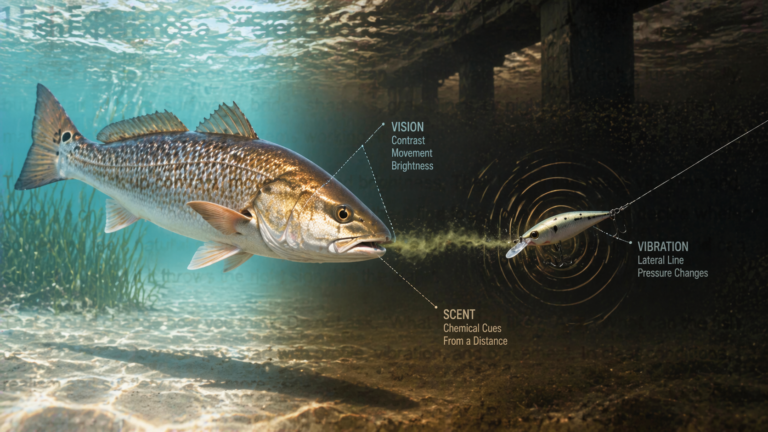
Saltwater fish do not rely on one sense. In clean shallow water they may track a lure visually, but in stained bays, surf wash, bridge shadows, grass lines, or night conditions they often make decisions with several systems working at once.
Their eyes pick up contrast, movement, and brightness. Their lateral line reads vibration and pressure changes. Their sense of smell helps them find food, follow a trail, and decide whether something feels natural enough to eat. This is why a lure that looks average in your hand can still get crushed if it throws the right signal in the water.
That should change how you think. Do not ask, “What lure do I like?” Ask, “What can the fish detect here?” In low visibility, start with profile, vibration, and placement. In clear conditions, realism and subtlety matter more.
2. Color Is Really About Contrast and Visibility
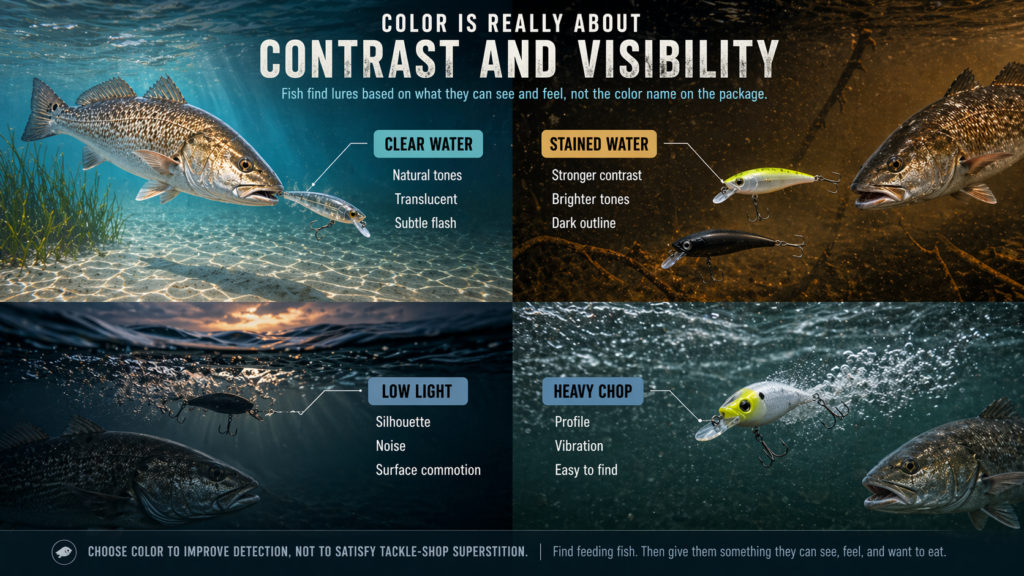
Anglers love color arguments because they are easy. Fish, unfortunately, make the topic harder. Underwater color is not fixed. Depth, suspended sediment, cloud cover, glare, bottom color, and water stain all change what a lure looks like.
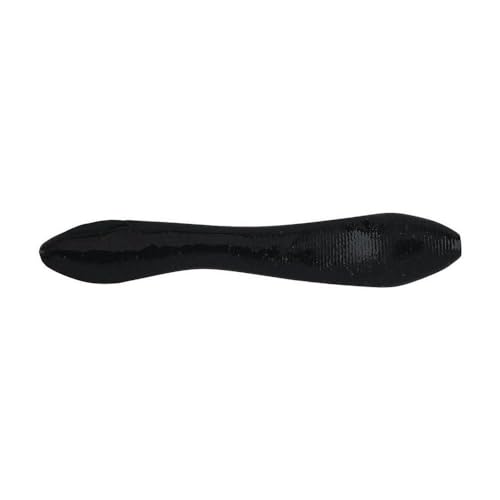
That means color choice should be practical, not emotional. In clear water, natural bait tones often win because fish can inspect the bait longer. In dirty water, silhouette, brightness, and contrast matter more than subtle shade differences. Dark colors can show a stronger outline. Bright chartreuse, white, or reflective finishes can help fish locate the bait quickly.
The useful rule is this: choose color to improve detection, not to satisfy tackle-shop superstition. Put more effort into finding feeding fish than into debating one plastic shade against another.
- Clear water: natural, translucent, subtle flash
- Stained water: stronger contrast, brighter tones
- Low light: silhouette, noise, and surface commotion
- Heavy chop: easier-to-find profile and vibration
3. Vibration and Movement Trigger Strikes
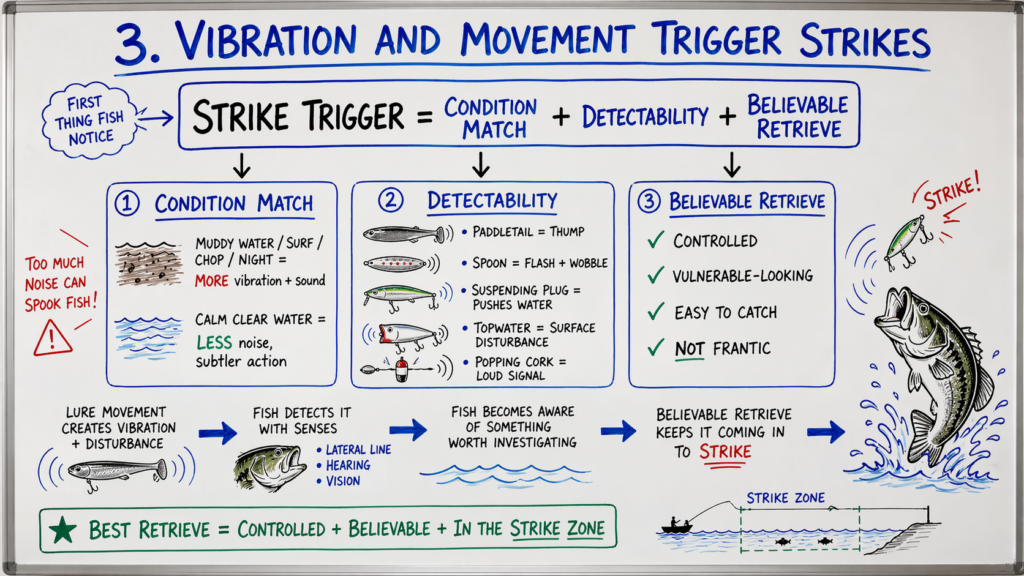
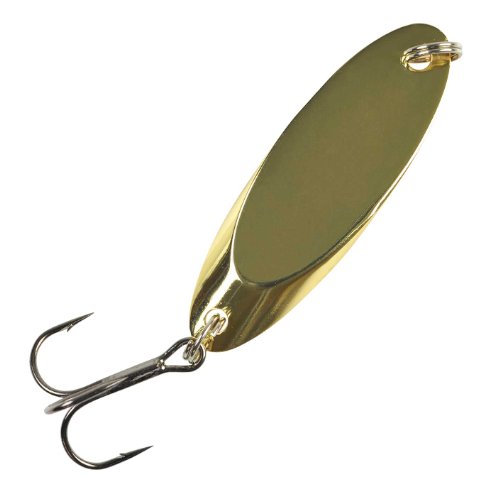
In saltwater, vibration is not a side note. It is often the first thing that makes a fish aware of your lure. A paddletail thumps differently than a spoon, a suspending plug pushes water differently than a topwater, and a popping cork advertises itself in a completely different way.
This is why lure action should match conditions. In muddy water, chop, surf, and night fishing, stronger vibration and sound can help fish find the bait. In calm clear conditions, too much noise can look wrong and spook pressured fish.
Many anglers also overwork their lures. Most predators are looking for something vulnerable, not something frantic beyond reason. The best retrieve is usually the one that looks easy to catch: controlled, believable, and placed where the fish already has an advantage.
4. Scent Helps More Than Most Anglers Admit
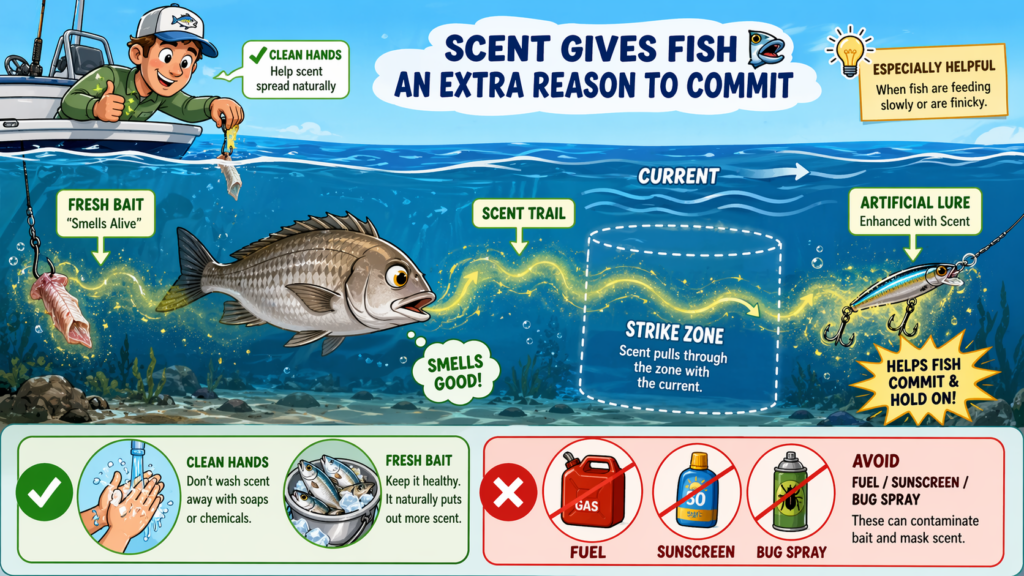
Scent matters because water carries chemical information. Natural bait works so well partly because it does more than look alive — it smells alive. Even artificials can benefit when scent gives fish an extra reason to track or hold onto the bait.
This does not mean every bottled scent is magic. It means chemical realism is part of the game. Fresh bait, clean hands, and avoiding obvious contamination matter more than many people want to admit. Fuel, sunscreen, insect spray, and other harsh residues are not ideal things to put on something you are asking a fish to eat.
Scent becomes especially valuable when current can pull a trail through the strike zone, or when fish are feeding slowly and need help committing.
5. Moving Water Matters
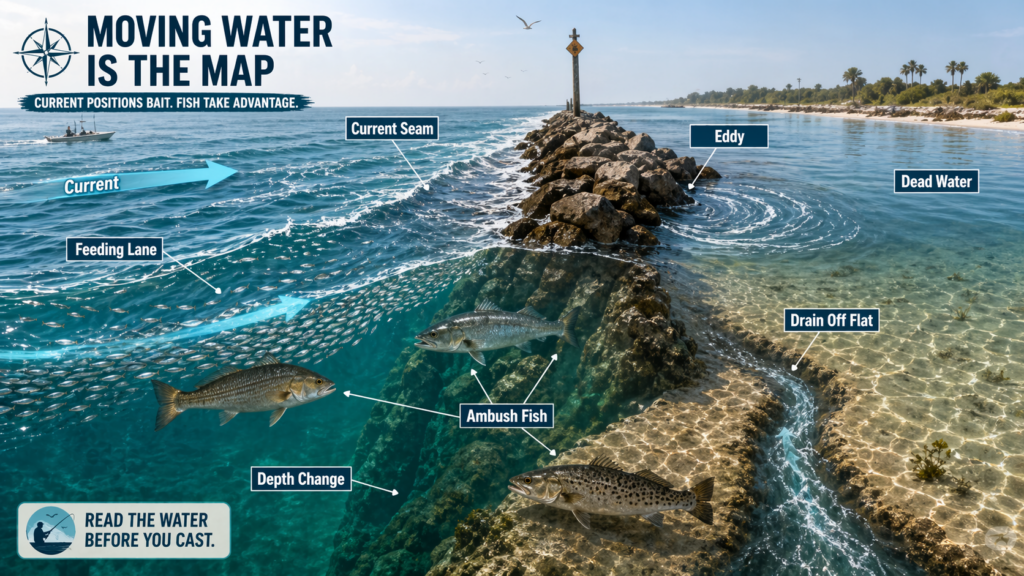
Current is one of the clearest organizing forces in saltwater fishing. It positions bait, creates feeding lanes, forms seams and eddies, and lets predators hold in a comfortable spot while food comes to them.
This is why one side of a pass, point, reef, bridge, drain, or jetty can be alive while the other side feels empty. Productive water is not random. Fish set up where current gives them a mechanical advantage over prey.
When you arrive at a spot, read the water before you cast. Look for bait getting pushed, a current edge, a depth change, a shoreline point, a trough in the surf, an eddy behind structure, or a drain pulling water off a flat. That is usually where the buffet is being served.
6. Structure Matters When It Does Something Useful to Bait
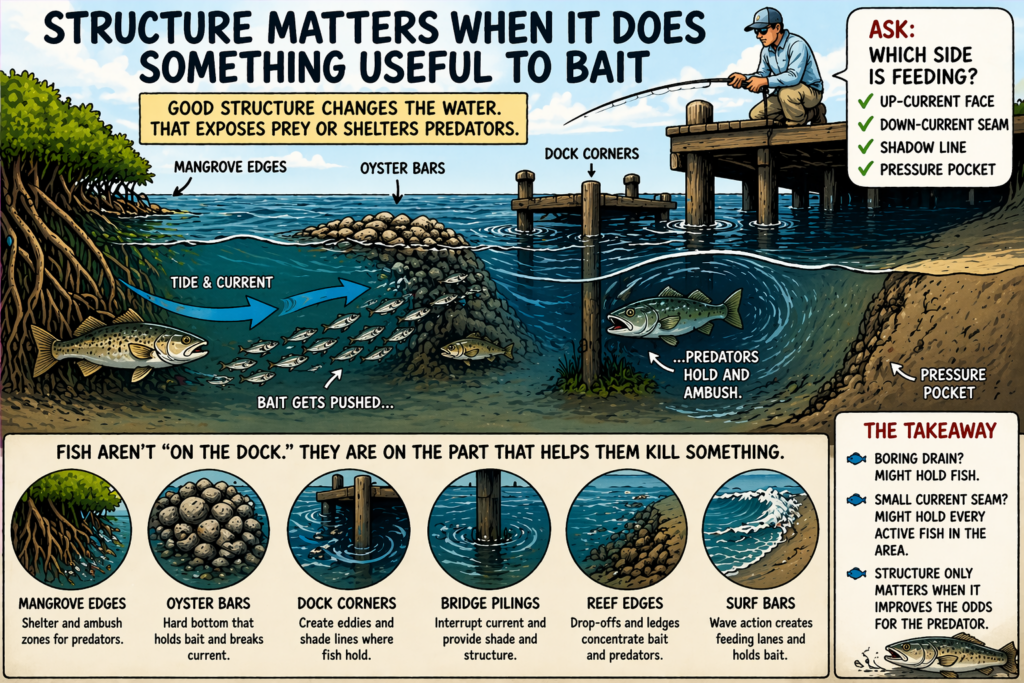
Structure is not automatically good. Good structure changes the water in a way that exposes prey or shelters predators. Oyster bars, dock corners, mangrove edges, shell pads, bridge pilings, reef edges, and surf bars all become better when tide and bait line up with them.
A lot of anglers cast at obvious structure without asking the right question: which side is feeding? The up-current face, down-current seam, shadow line, or pressure pocket can make all the difference. Fish are not simply “on the dock.” They are on the part of the dock that helps them kill something.
That is why a boring drain can outfish a pretty shoreline and why one small current seam can hold the only active fish in a large area. Structure only matters when it improves the odds for the predator.
7. Low Light Expands the Strike Window
Dawn, dusk, overcast periods, dock-light edges, and nighttime windows are productive for a reason. Fish often become bolder when the light drops because prey has less time to react and predators can rely more on vibration, silhouette, and short-range vision.
That does not mean bright mid-day is bad. It means fish often reposition. In full sun they may sit tighter to shade, deeper water, potholes, grass edges, or current breaks. If you refuse to adjust location and angle with the light, you will make good spots fish badly.
Low light is not magic. It just changes the terms of the fight.
Field Rules That Actually Help on the Water
| No. | Rule |
|---|---|
| 1 | Find moving water before you worry about lure color. |
| 2 | Cast to where prey gets exposed, not just to where the structure looks good. |
| 3 | Use more vibration in dirty water and more realism in clear water. |
| 4 | Treat scent as part of the presentation, not as an afterthought. |
| 5 | Slow down when fish are present but not committing; speed up when they are hunting actively. |
| 6 | Change one variable at a time so you can learn what actually improved the bite. |
| 7 | If a good spot dies, check current, light, and bait before panic-switching lures. |
The point of all of this is not to make fishing feel academic. It is to make it less random. The more clearly you can read light, current, bait, and structure, the less you have to depend on luck. That is what fishing smarter in saltwater really means.

















![Shimano Fishing Nasci 1000Fb Spinning Reel [NAS1000FB]](https://m.media-amazon.com/images/I/411DLN3yGsL._SL500_.jpg)