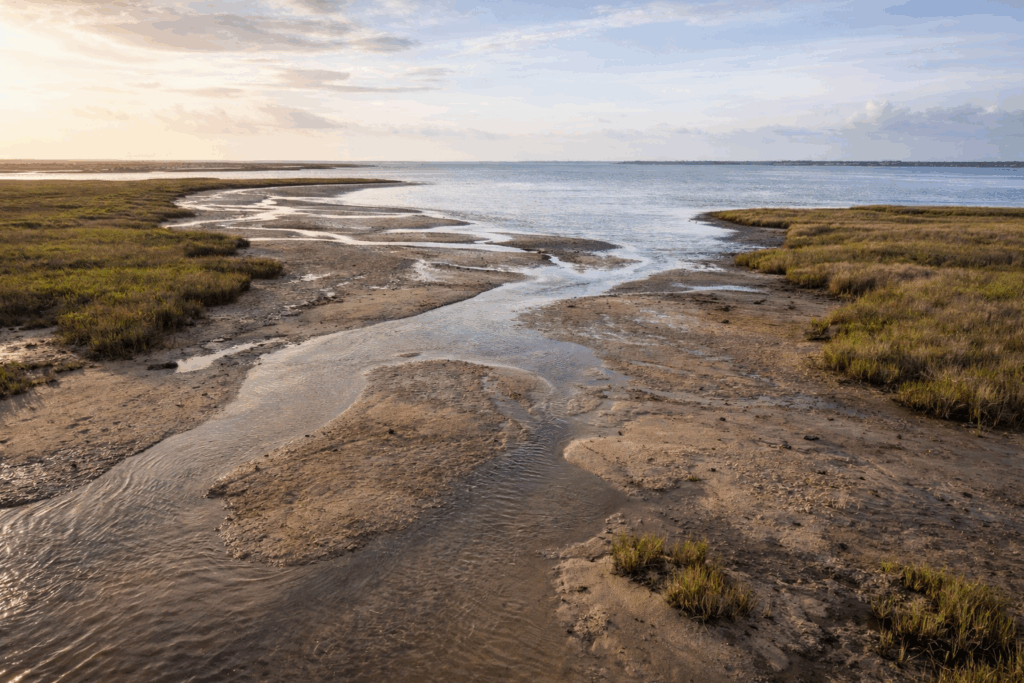
Fishing based on the inbound and outbound tides can make your day on the water. This can take time to learn, but can be very much repeatable. There is more detail from TPWD on this, but here is a summary of the key points to remember so that it’s easier to remember and take advantage in practice.
Big Picture
- Fish shift locations with the tide and bait movement (in inshore bays/estuaries, current + bait flow dictate where predators stage).
Incoming Fishing Tides
- Target shallow zones as water rises (predators push onto flats, edges, and shorelines with the bait).
- Work channels and bay mouths as water floods inward (increased baitfish/crustacean traffic with incoming current).
- Focus shorelines early in the flood (rising water pins prey to the edge, concentrating bites).
- Surf anglers: start at the beginning of the flood when current picks up (bait gets swept along beaches).
- Timing: arrive 2–3 hours before high tide (gives you the productive ramp-up phase).
- Prep: check local tide tables a few days ahead (online “tide tables fishing” or a tackle shop chart).
Outgoing Fishing Tides
- Fish structure that funnels draining water: potholes, ledges, channels, bridges, and piers (prey gets flushed off flats).
- At bridges/piers, cast up-current and let baits drift back (predators usually stage up-current).
- Use low water to “map” deeper depressions on flats (those holes often hold fish at low tide).
- Adjust for wind/weather effects on actual water levels (offshore winds can make lows lower than charted).
- Supplement planning with a fishing almanac (adds long-range weather context to the tide chart).
Pattern Building & Record-Keeping
- Fish don’t feed or move randomly—log your catches (note spot, incoming vs. outgoing, and season/time of year).
- Use those notes to identify repeatable patterns by species (helps decide where to set up for each tidal phase).
- With practice, reading tide reports becomes routine (you’ll anticipate where fish will be at each stage).