Table of Contents
- What This Guide Covers
- Fishing Almanacs & Monthly Forecasts
- Predicting the Best Fishing Times (Solunar Theory)
- Solunar Fishing Tips
- Best Times to Fish: Time, Weather & Temperature
- Using Daily Forecasts & Time of Day
- Fishing Calendars & Apps
- Tides 101: Causes & Why They Matter
- Reading Tide Charts (Incoming vs. Outgoing)
- Moon Phases & Fishing
- How to Fish the Tides (Inshore & Offshore)
- The Best Tide to Fish
- Ask Around: Local Knowledge
1) What This Guide Covers
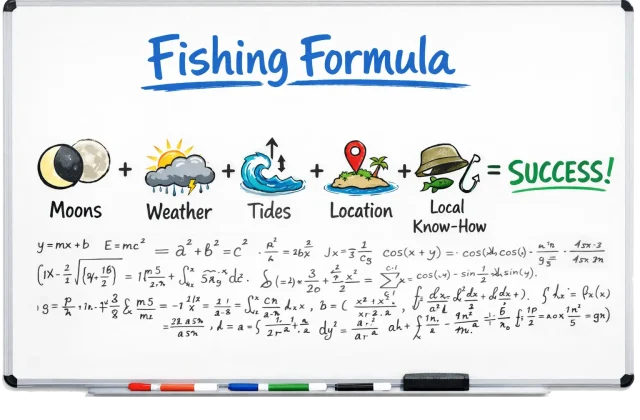
This single, practical article ties together fishing almanacs, solunar theory, daily forecasts, weather, and tides. Use it to plan months ahead or to pick the best window today.
2) Fishing Almanacs & Monthly Forecasts
Fishing almanacs and monthly forecasts classify each day as best, good, fair, or poor. They’re available online or in print, and they’re useful when you want to set trips weeks or months in advance.
Once you’re comfortable with the basics, checking an almanac or monthly forecast is an easy way to line up travel dates with historically productive periods.
3) Predicting the Best Fishing Times (Solunar Theory)
Fish feed in cycles. Those feeding cycles are strongly influenced by the moon’s position and phase—this is the basis of solunar theory. New and full moons often coincide with stronger tidal movement (in saltwater) and more defined feeding windows (fresh and salt).
4) Solunar Fishing Tips
- New & Full Moon (Saltwater): Stronger gravitational pull → more tidal movement → more bait movement → often better fishing.
- Full Moon (Any Water): Nighttime visibility improves. Consider night fishing when legal and safe.
- Major/Minor Periods: Major periods commonly run ~2 hours; minor periods ~1 hour. If they overlap sunrise/sunset, bump them to the top of your plan.
- Context Matters: Solunar windows are helpful, but weather swings can mute or amplify results. Always factor current conditions.
5) Best Times to Fish: Time, Weather & Temperature
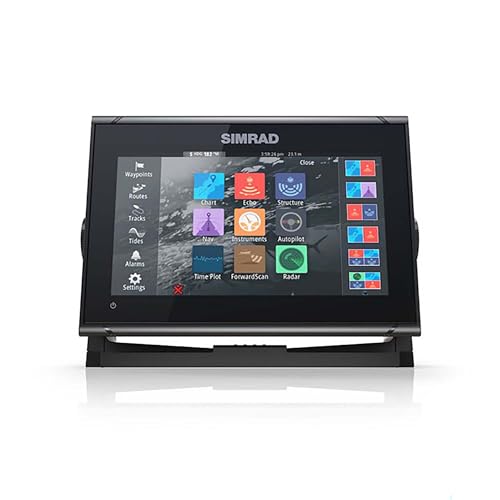
All fish are cold-blooded; extreme water temperatures (hot or cold) reduce oxygen and activity. Avoid the extremes when possible. A fish finder and water temperature gauge give real-time data to pick the most active depth and zone.
6) Using Daily Forecasts & Time of Day
Bright midday sun often pushes fish deeper; early and late windows are usually more comfortable and productive. Daily fishing forecasts (e.g., from reputable weather or almanac sources) help you decide whether fish are likely to be active and which hours to target.
7) Fishing Calendars & Apps
Modern fishing calendars blend your location with weather, tides, and moon phases to suggest prime windows—sometimes by species. They’re handy for planning far ahead or choosing a better spot the day of. Use them alongside your local forecast for best results.
8) Tides 101: Causes & Why They Matter
Tides are the vertical movement of seawater driven by the gravitational pull of the moon and sun. High tide is the peak of that pull; low tide is the trough. Offshore in the open ocean the rise/fall is subtle, but toward the coasts it becomes pronounced—and easy to track.
Why anglers care: moving water triggers food chains. Current stirs up crustaceans and positions baitfish; predators follow the groceries.
9) Reading Tide Charts (Incoming vs. Outgoing)
Tide tables and charts show predicted highs and lows (height and time). Pair them with local wind and weather, which can shift water levels beyond predictions (e.g., offshore wind can make an already low tide even lower).
Incoming Tide (Rising)
- Fish often push shallow with the rising water, hunting shorelines, flooded edges, and flats.
- Plan to arrive 2–3 hours before high tide to catch the building current.
- Cast up-current and allow baits to drift naturally back.
Outgoing Tide (Falling)
- Bait flushes from marshes, creeks, and flats into channels, passes, potholes, ledges, bridges, and piers.
- Predators often stage up-current to ambush food drifting past.
- As water drops, note the deeper depressions holding fish at low tide—those are money later.
10) Moon Phases & Fishing
Many anglers see a clear link between the new/full moon periods and better fishing—provided weather and water are stable. Cold fronts, muddy runoff, or abrupt changes can override any moon advantage.
- Stack the deck: Target major/minor periods that land near sunrise/sunset during new/full moons.
- Watch moonrise/moonset: Even on “average” days, activity often bumps around these times.
11) How to Fish the Tides (Inshore & Offshore)
Inshore
- Incoming: Work shorelines, flats, and edges that flood with rising water. Crustaceans and bait concentrate there.
- Outgoing: Shift to deeper lanes—channels, drop-offs, and passes. For species like redfish, try a live shrimp under a popping cork near potholes and edges.
- Presentation: Cast into the current and let your bait or lure travel naturally with it.
Offshore
- Tide changes still matter, but wind and weather currents can dominate.
- Slack tide generally slows the bite; moving water tends to fire it up.
- Pelagics (e.g., sailfish, dolphinfish) often travel with current lines—position the boat to drift with the flow so your baits/lures ride naturally.
- Structure species (e.g., grouper): If current is ripping, trolling a jig on a downrigger can keep you in the zone when anchoring precisely is tough.
- Many offshore anglers like the days just before a full moon for stronger tidal energy and current.
12) The Best Tide to Fish
Short answer: a moving tide. Whether rising or falling, moving water positions bait and predators, creating predictable ambush points.
Quick Targets
- Outgoing: Mouths of estuaries, channel edges, bridge and pier pilings, jetties, and other structure where prey funnels past.
- Incoming: Flats and shorelines as cooler, cleaner, oxygen-rich ocean water sweeps in.
- Slack Water: Expect a lull. Use it to re-rig, eat, or relocate.
Keep notes on where you caught fish, the tide stage, and season. Patterns repeat—and your logbook becomes your best local “forecast.”
13) Ask Around: Local Knowledge
Your local bait shop and regulars are gold mines. Many will share seasonal timing, productive tides, and species-specific tips for your area. Combine that intel with your almanac/app data and today’s weather, and you’ve got a reliable plan.
Final reminder: Calendars and almanacs point you in the right direction, but current conditions (wind, fronts, water clarity, temperature) ultimately decide how fish behave. Plan with the tools; fish what’s in front of you.