Beach Conditions for Kleberg/Nueces Islands - Mustang Island / Port Aransas
Today
Tomorrow

Gulf of Great Fishing

Gulf Coast Fishing

One Gulf.
Many Fisheries.

Whether you call it the Gulf of Mexico or the Gulf of America, one thing is not up for debate: this massive body of water supports some of the most varied and exciting saltwater fishing in the country.

But Florida fishing is not Texas fishing—and even Port Arthur, Port Aransas and South Padre Island can behave like very different fisheries.

🌡️ Temperature Moves bait and fish
🌊 Depth Changes habitat
🪸 Structure Concentrates life
🧭 Current Moves food and water

Why One Gulf Can Fish So Differently

The Gulf is not an evenly shaped bowl. Its , continental shelf, bottom type, currents, freshwater inflow and seasonal temperatures change tremendously from east to west and north to south.

Fish respond to those conditions—not state lines. A king mackerel does not know whether it is in Texas or Florida. It follows suitable temperature, bait, currents and habitat.

Depth Changes the Fishery

A simplified look at why offshore distance and water depth matter.

COAST Continental shelf Shelf break Deep Gulf 50–100 ft 100–200 ft 500+ ft 1,000+ ft Structure Long shallow run off much of Texas

Around the Gulf: Different Water, Different Fishing

Florida

More natural reef and hard-bottom habitat, clearer water in many areas, and stronger tropical influence—especially farther south.

Grouper Snapper Tarpon Snook

Alabama & Mississippi

Short coastlines but productive estuaries, barrier islands and extensive artificial reef habitat.

Red Snapper Cobia Kingfish

Louisiana

Marshes, tremendous river influence and offshore oil platforms combine to create one of the Gulf's most productive fisheries.

Redfish Trout Tuna Wahoo

Texas

Enormous bay systems and a broad continental shelf produce great inshore fishing—but often require longer offshore runs to deep water.

Redfish Trout Snapper Kingfish

Florida: Warm Water, Reefs and the Loop Current

Warm Caribbean water enters the Gulf through the Yucatán Channel and helps form the . Its position changes, but it plays a major role in transporting warm water, bait and pelagic species through the eastern Gulf.

Florida also benefits from extensive limestone, reef and hard-bottom habitat. That favors species such as grouper and snapper and helps explain why Florida offshore fishing can look very different from much of Texas.

Warm Water Moves Like a Highway

Currents carry heat, plankton, bait and predators.

Yucatán Channel Florida LOOP CURRENT warm Caribbean water Bait and pelagic fish follow favorable water

Louisiana: Rivers, Marshes, Platforms and Oxygen

Louisiana is heavily shaped by the Mississippi River and the . Freshwater, nutrients and sediment create huge marsh and estuary systems that support shrimp, crabs, baitfish, redfish and speckled trout.

Offshore, oil and gas platforms provide vertical structure in water that otherwise may have little natural relief. Farther out, Louisiana offers excellent tuna, wahoo, mahi and billfish opportunities.

During warmer months, parts of the northern Gulf can develop bottom water. When oxygen becomes too low, mobile fish and shrimp move elsewhere—meaning water quality can affect where the fish are just as much as bait or temperature.

Texas Is Not One Fishery Either

Upper Coast

Port Arthur / Sabine

Strong river and estuary influence, greater salinity swings, murkier coastal water and colder winter conditions.

Trout Redfish Flounder
VS.
Lower Coast

South Padre Island

Warmer winters, greater subtropical influence and increased chances for tropical species and clearer Gulf water.

Tarpon Snook Kingfish

Between them, Galveston, Freeport, Matagorda, Port O'Connor, Port Aransas and Corpus Christi form a gradual transition—not a hard biological line.

Why Port Aransas Is Such a Special Fishing Port

One Port. Five Very Different Fisheries.

Port Aransas sits beside a major natural connection between Texas bays and the open Gulf.

carries tidal water between Corpus Christi Bay and the Gulf. The jetties add hard structure while the moving water transports shrimp, crabs and baitfish through a natural feeding corridor.

That gives anglers an unusual amount of variety from the same home port:

🌾 Bays & Flats
🪨 Pass & Jetties
🌊 Beach & Surf
🛥️ Offshore Reefs
🐟 Blue Water

An angler can target redfish or trout in protected bay water, kingfish or tarpon around the jetties and beachfront, red snapper offshore, or continue into deeper Gulf water for mahi, wahoo, tuna and billfish.

Few destinations offer that many completely different saltwater fishing styles from the same community. Port Aransas also has generations of charter fishing and tournament history behind it, including the Deep Sea Roundup.

Temperature Changes Everything

Temperature affects metabolism, migration and bait movement. Warm-water species may become common along Texas during summer while remaining available much longer in South Florida.

Typical Temperature Influence

This is conceptual—not a live water-temperature forecast.

COOLER TRANSITIONAL WARM SUBTROPICAL Winter upper Gulf Seasonal movement South Gulf

The Surface Temperature Is Only Part of the Story

Thermocline

During warmer periods, a can form where water temperature changes quickly with depth.

Warmer surface water THERMOCLINE Cooler deep water

Why It Matters

Fish may stack above, below or directly along that temperature boundary.

That is one reason offshore anglers can mark fish on sonar but fail to get bites: the bait may simply be ten or twenty feet outside the preferred water layer.

Depth is not just how far your bait sinks.
It can determine the temperature, oxygen and habitat surrounding it.

Current Can Matter More Than the GPS Coordinate

Currents transport heat, oxygen, plankton, bait and fish larvae. Where different water masses meet, predators often gather.

🌊 Color Break

A boundary between green coastal water and cleaner blue water can act like an offshore edge.

🌿 Weed Line

collects along converging currents, providing cover for baitfish.

🐟 Predator Line

Mahi, wahoo, tuna and billfish may patrol those current boundaries because the food chain is already concentrated there.

Bottom Structure Changes Everything

Two spots can have the same depth and temperature yet fish completely differently if one has featureless sand and the other has a wreck, reef, rock pile or platform.

Same Depth. Very Different Habitat.

Featureless Bottom Same 90-foot depth Structure Same 90-foot depth Reef • wreck • platform • hard bottom

The Same Thing Happens Inside the Bays

Freshwater flowing into Texas bays creates . Heavy rain can move the preferred habitat for trout, redfish, baitfish and shellfish even though the shoreline itself has not changed.

Yesterday's hot spot can look empty today—not because the fish vanished, but because the conditions they wanted moved somewhere else.

So Is Florida Fishing Better Than Texas?

Not really. It is better to ask: better for what?

Florida Strengths

Reefs & Tropical Habitat

Natural hard bottom, limestone, clearer water and warmer conditions favor grouper, reef snapper, snook and other tropical or subtropical species.

Texas Strengths

Bays, Flats & Artificial Structure

Huge estuaries support outstanding redfish and trout fishing, while reefs, wrecks and offshore platforms create excellent snapper and pelagic opportunities.

So How Much Does Gulf Fishing Really Vary?

A lot more than many anglers realize.

The difference between Port Arthur and South Padre Island is large enough to affect seasonal temperatures, salinity, water clarity, bait movement, fish migration and the prevalence of tropical species. The difference between Florida and Texas is larger still.

Yet all of those fisheries remain connected. Currents move larvae and bait. Migratory fish travel between regions. Weather changes temperatures and salinity. Structure determines where life gathers.

Sometimes the difference between an empty cooler and a day you talk about for years is not another state or another county. It may be five miles farther offshore, ten feet deeper, two degrees warmer, the right wreck, or one current line away.

One Gulf. Countless Ways to Fish It.

Call it the Gulf of Mexico.

Call it the Gulf of America.

Call it whatever you want.

JUST GO FISH!

Ferry Wait Times

to/from Port Aransas, Tx

Loading...
LOADING
Loading...
LOADING
Ferry status information is sourced from TxDOT and refreshed every 5 minutes. Information is provided for convenience only. Check official TxDOT sources for the latest conditions.

Port A Tide Gauge

Current Day • Loading
Today
Use arrows for next 14 days
Loading
-- ft
Loading NOAA data
↑≋
Next High Tide:
Loading
↓≋
Next Low Tide:
Loading
Select Time for Selected Day
12:00 AM 11:59 PM
Viewing: Loading
⚓ HookedOnPortA.com™ © 2026
TEXAS SALTWATER
FISH SPECIES

BLACK DRUM

Gray bottom-feeding drum; juveniles have dark vertical bars.

Daily Bag Limit: 5Minimum Length: 14"Maximum Length: 30"
One fish over 52" can be retained as part of the bag; consult TPWD.
View regulations ↗

BLUE MARLIN

Large billfish with a blue back and long pointed bill.

Daily Bag Limit: No state limitMinimum Length: 131"Maximum Length: None
Federal HMS regulations and permit/reporting requirements may apply.
View regulations ↗

BLUEFISH

Toothy blue-green schooling predator with powerful jaws.

Daily Bag Limit: No state limitMinimum Length: NoneMaximum Length: None
No species-specific state bag/length rule listed by TPWD; other laws may apply.
View regulations ↗

COBIA (LING)

Dark brown fish often cruising near buoys or rays.

Daily Bag Limit: 1Minimum Length: 40"Maximum Length: None
View regulations ↗

FLORIDA POMPANO

Compact silvery jack found along sandy surf beaches.

Daily Bag Limit: No state limitMinimum Length: NoneMaximum Length: None
No species-specific TPWD state bag or length limit found.
View regulations ↗

FLOUNDER

Flat bottom-dweller with both eyes on the same side.

Daily Bag Limit: 5Minimum Length: 15"Maximum Length: None
Closed for harvest November 1–December 14 each year.
View regulations ↗

GREATER AMBERJACK

Powerful offshore jack with a dark band near the eye.

Daily Bag Limit: 1Minimum Length: 38"Maximum Length: None
Federal waters have seasonal requirements.
View regulations ↗

GROUPER (VARIES BY SPECIES)

Bottom-dwelling reef fish with stout bodies and large mouths.

Daily Bag Limit: Species-specificMinimum Length: VariesMaximum Length: Varies
Black grouper: 4, 24" minimum; gag: 2, 24" minimum; goliath and Nassau: no harvest. Identify the species before keeping.
View regulations ↗

JACK CREVALLE

Strong schooling jack with a forked tail and dark gill spot.

Daily Bag Limit: No state limitMinimum Length: NoneMaximum Length: None
No species-specific TPWD state bag or length limit found.
View regulations ↗

KING MACKEREL (KINGFISH)

Fast offshore predator with a slender streamlined body.

Daily Bag Limit: 3Minimum Length: 27"Maximum Length: None
View regulations ↗

LANE SNAPPER

Small reef snapper with pink stripes and a dark flank spot.

Daily Bag Limit: No state limitMinimum Length: 8"Maximum Length: None
Federal reef-fish requirements may differ.
View regulations ↗

MAHI-MAHI (DOLPHINFISH)

Colorful offshore fish with a blunt forehead and forked tail.

Daily Bag Limit: No state limitMinimum Length: NoneMaximum Length: None
No species-specific TPWD state bag or length limit; check applicable federal rules.
View regulations ↗

RED DRUM (REDFISH)

Copper-bronze fish with a black tail spot; abundant along bay shorelines.

Daily Bag Limit: 3Minimum Length: 20"Maximum Length: 28"
Special oversized red drum tag rules apply.
View regulations ↗

RED SNAPPER

Bright red reef fish common around offshore structures.

Daily Bag Limit: 4Minimum Length: 15"Maximum Length: None
State waters only: federal bag, size, and season differ.
View regulations ↗

SHARK (VARIES BY SPECIES)

Predatory fish with distinctive cartilage skeletons and multiple gill slits.

Daily Bag Limit: 1 combined*Minimum Length: VariesMaximum Length: None
One allowable shark combined, with species-specific minimums (24", 64", 99"); many species are prohibited. See TPWD.
View regulations ↗

SHEEPSHEAD

Silver fish with bold vertical bars and sturdy crushing teeth.

Daily Bag Limit: 5Minimum Length: 15"Maximum Length: None
View regulations ↗

SPANISH MACKEREL

Swift silver mackerel with yellow spots along its sides.

Daily Bag Limit: 15Minimum Length: 14"Maximum Length: None
View regulations ↗

SPECKLED TROUT (SPOTTED SEATROUT)

Silver fish marked with dark spots on its back and tail.

Daily Bag Limit: 3Minimum Length: 15"Maximum Length: 20"
Special oversized spotted seatrout tagging provisions apply.
View regulations ↗

TARPON (SILVER KING)

Large silvery game fish famous for dramatic jumps.

Daily Bag Limit: 1Minimum Length: 85"Maximum Length: None
Limited harvest requires special conditions; consult TPWD.
View regulations ↗

TRIPLETAIL

Mottled fish found hovering beside buoys or floating debris.

Daily Bag Limit: 3Minimum Length: 17"Maximum Length: None
View regulations ↗

VERMILION SNAPPER

Slim reddish snapper commonly found around offshore reefs.

Daily Bag Limit: No state limitMinimum Length: 10"Maximum Length: None
Federal reef-fish requirements may differ.
View regulations ↗

WAHOO

High-speed pelagic fish with blue vertical bars.

Daily Bag Limit: No state limitMinimum Length: NoneMaximum Length: None
No species-specific TPWD state bag or length limit; check applicable federal rules.
View regulations ↗

YELLOWFIN TUNA

Powerful offshore tuna with long yellow sickle fins.

Daily Bag Limit: No state limitMinimum Length: NoneMaximum Length: None
Federal HMS permits, size and reporting restrictions may apply.
View regulations ↗
Last TPWD automated check: 2026-10-27 08:41:55 · Federal offshore limits, permits and seasons may differ · Always check emergency rules and seasonal closures. Official TPWD regulations ↗
Temperature Travel Planner

Temperature Travel Planner

Pick your preferred travel temperatures and travel week. The map colors each destination using a baseline estimate from several years of historical seasonal temperature patterns.

Adjust Travel Preferences

Set the minimum and maximum daily temperatures you'd like to travel in, drag the week slider, then click Update Map.

1. Adjust the low and high temperatures

Set the minimum and maximum daily temperatures you'd like to travel in.

2. Set the travel week

Drag the date slider to the week you want to check. The week range will update below the slider.

3. Click Update Map

The dots on the map will change colors based on the expected temperature for that week in each location.

°F
°F
Week 1 Week 52
Week 30
Change settings, then click Update Map.

Important: This is a climate-baseline planner, not a live weather forecast. It looks back at several years of temperature data and uses those patterns as a baseline to estimate future comfort zones. For real travel decisions, check the current forecast before you leave.

Best travel zones for Week 30

Cold: 0 Good: 0 Hot: 0

⭐ Our Local Favorites ⭐

Bars and restaurants around Port Aransas and surrounding areas.

Filters:
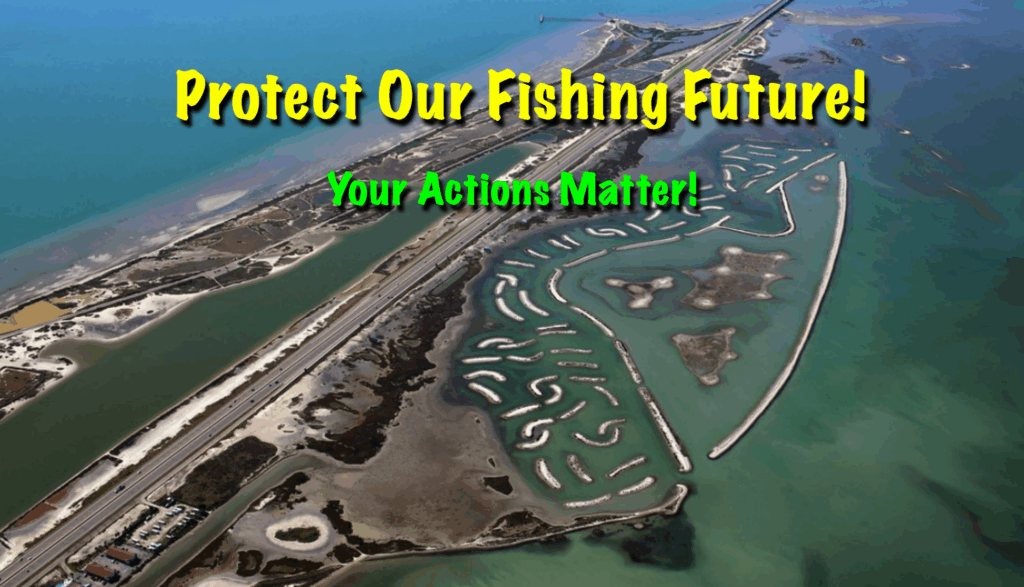
protect our fishing future

Protecting the Coastal Bend Bays:

Why Fishermen’s Choices Matter

Along the Texas Coastal Bend, the bays and estuaries supported by the Coastal Bend Bays & Estuaries Program (CBBEP) are more than pretty backdrops for a day on the water. They are living, working nurseries that keep our fisheries alive and our coastal communities thriving. CBBEP exists to safeguard these systems while still supporting fishing, boating, and a strong local economy.


Nowhere is that balance more visible than in Port Aransas – “The Fishing Capital of Texas.”  That title isn’t a trophy we won once and get to keep forever. It depends on healthy bays, strong fish populations, and a community of anglers who are willing to protect the very habitats that make Port A special.

And that starts with how we run our boats in shallow water.


Seagrass: The Foundation of Our Fishery

The Coastal Bend holds a massive share of Texas’ seagrass, much of it in the shallow, clear flats that attract redfish, trout, drum, and flounder.


Seagrass meadows are not “just grass”:

    • They are nurseries where juvenile fish, shrimp, and crabs feed and hide from predators.

    • Their dense roots and rhizomes stabilize the bottom, preventing erosion and holding the bay in place.

    • They help keep the water clearer and more productive, supporting the entire food chain — from baitfish to trophy gamefish.

If you enjoy sight-casting to tailing reds on Lighthouse Lakes, poling over clear grass flats near Shamrock, or drifting the Laguna Madre for specks, you’re already relying on healthy seagrass meadows more than you might realize.


The Hidden Damage of Running Motors in Skinny Water

Modern shallow-draft boats make it tempting to run “just one more shortcut” across a grassy flat. But when a propeller or even a low-running motor plows through seagrass, it cuts a trench into the meadow — a prop scar.


Those scars are more than cosmetic:

    • The prop tears up the plants and the buried root system, leaving bare sand or mud behind.

    • These bare scars can take years to heal, and heavy scarring can fragment the meadow so much that it never fully recovers.

    • As seagrass disappears, so does the habitat complexity that young fish, shrimp, and crabs need to survive — meaning fewer adult fish for anglers later.

When we “power through” shallow grass rather than lifting our motors or choosing a deeper route, we are literally cutting up the nursery that supports our own future catches.


How Habitat Damage Comes Back to Hurt Fishermen

CBBEP and its partners spend years and millions of dollars restoring marshes, deltas, and seagrass habitats — like the Nueces Delta Preserve and the Nueces Bay Marsh Restoration Project — to rebuild the natural foundation that fish and wildlife rely on.


If anglers and guides continue to tear up seagrass in shallow areas, we work against those investments:

    • Fewer fish in the future – Less nursery habitat means lower survival of young fish, which eventually shows up as poorer fishing, smaller average sizes, and fewer “hero days” on the water.

    • More pressure on remaining spots – As healthy grass beds shrink, more boats crowd into fewer areas, multiplying the damage and the fishing pressure.

    • Economic ripple effects – Guides, bait shops, tackle stores, boat dealers, RV parks, hotels, and restaurants all depend on strong, reliable fishing. Damaged habitat undercuts that entire chain.

If we don’t take care of the habitat that supports our fishery, Port Aransas will slowly lose its grip on the title of “Fishing Capital of Texas.”

That title is built on reputation — on consistent, high-quality fishing and healthy bays. If we treat the seagrass and shallow flats like disposable racetracks, we’re quietly eroding the very thing Port A is famous for.


Partnering with CBBEP: “Lift, Drift, Pole, or Troll”

The good news: the solution is simple and completely in our hands.

CBBEP and Texas agencies promote a straightforward message for protecting seagrass:  Lift, drift, pole, or troll.


On the water, that looks like this:

    • Plan your route using channels
      Use charts, GPS, and markers to stay in deeper, established routes when running at speed. Avoid using shallow grass flats as shortcuts.

    • Watch your depth and your wake
      If you see prop wash turning from clear to milky, or you see bottom grass just under the hull, you’re too shallow to be on plane. Trim up, slow down, and reassess.

    • Lift and idle or drift when it gets skinny
      In shallow seagrass, trim your motor up or shut it off and drift across. You’ll spook fewer fish and avoid scarring the bottom.

    • Pole or carefully use a trolling motor
      Use a push pole or a properly trimmed trolling motor in the shallowest areas. Don’t let the trolling motor dig a trench in the bottom.

    • Look behind you
      A long muddy streak stretching away from your boat is a red flag that you just left a scar. Learn from it, mark that area mentally, and avoid repeating the mistake.

Every time an angler chooses to lift, drift, pole, or troll instead of “plowing” through, they keep a little more habitat intact — and that adds up across thousands of fishing trips every year.


Share the Message: Stewardship Is a Community Effort

CBBEP’s mission — to protect and restore the health and productivity of our bays while supporting economic growth and public use — only works if those of us who use the bays see ourselves as partners, not just customers.


That means:

    • Guides explaining seagrass etiquette to every client.

    • Friends calling out friends (respectfully) when they see someone tearing up a flat.

    • Marinas, bait stands, RV parks, and tackle shops posting reminders about shallow-water running and boating smart in the grass.

    • Anglers talking about habitat protection on docks, forums, and social media — not just bragging about the day’s catch.

We don’t protect Port Aransas’ reputation with slogans alone. We protect it with choices on the water and a willingness to share the message with everyone who launches a boat here. 

The Bottom Line

When we protect seagrass, we protect:

    • the bait that draws in gamefish,

    • the structure that keeps young fish alive,

    • the clarity and productivity of our bays,

    • and the future of sport and commercial fishing in the Coastal Bend.

If we want Port Aransas to remain proudly known as “The Fishing Capital of Texas,” then boaters, guides, and the fishing industry must treat seagrass and shallow habitats as priceless infrastructure — not as expendable shortcuts.


Every pass across a flat is a choice:
Cut scars that will haunt our fishery for years, or glide over gently, leaving the meadow — and tomorrow’s catch — intact.

For the sake of our bays, our businesses, our kids, and Port A’s hard-earned title, it’s time for all of us to boat like the future of fishing depends on it – because it does!

 Read more about the Coastal Bend Bays & Estuaries Program and its work to protect our Texas Coastal Bend bays in this EPA Success Story.


Red Dot Pier

Live Chat request intiated!
 
I will be notified regarding your chat request. It might take me a couple of minutes to login to respond if I am not already online. Please be patient and I will respond ASAP. If you cannot wait, I will follow-up via email or phone call. Thanks for partnering with us to bring realtime bait status for Port Aransas area anglers!
ttb logo transparent


We’re Sorry!


This bait vendor has not yet agreed to provide status updats on our Bait Dashboard, but hope this could happen soon so that we can bring you more online choices. Check back often!

Fin & Feather

Cos Way Bait & Tackle

Deep Sea Headquarters

Port A Outfitters


hopa logo oval

Privacy Policy

Last updated: October 3, 2025

HookedOnPortA.com™ (“we,” “our,” or “us”) values your privacy. This Privacy Policy explains how we collect, use, and protect your personal information when you visit or interact with our website https://hookedonporta.com.


1. Information We Collect

When you interact with our website, we may collect the following information:

  • Name

  • Email address

  • Phone number (if provided)

  • Any information you voluntarily provide through forms or communications

In the future, we may also collect information through cookies, analytics tools, or similar technologies to understand how our website is used.


2. How We Use Your Information

We use your information to:

  • Respond to your inquiries and requests

  • Send updates such as our latest Fishing Reports (if you opt in)

  • Improve our website content and user experience

  • Communicate with you about HookedOnPortA.com™ news and updates

You may opt out of receiving emails or other communications from us at any time by following the unsubscribe instructions in our messages.


3. Information We Do Not Share or Sell

We respect your privacy. We will never sell, rent, or give your personal data to third parties for marketing purposes.

Your information may only be shared with trusted service providers (such as our hosting provider, GoDaddy) when necessary to operate our website. These providers are required to keep your information secure and confidential.


4. Data Security

We rely on our hosting provider (GoDaddy) and industry-standard safeguards to protect your information. However, no method of online transmission or storage is 100% secure, and we cannot guarantee absolute security.


5. Cookies & Analytics

At this time, we do not use cookies or analytics tools. In the future, we may use cookies or third-party analytics (such as Google Analytics) to improve website performance and user experience. If we do, we will update this policy and provide options for you to manage cookie preferences.


6. Your Choices and Rights

  • You may unsubscribe from emails at any time.

  • You may request that we update or delete your information by contacting us at [Insert Contact Email].

  • If we add SMS/text messaging in the future, you will have the option to opt out at any time.

7. Updates to This Policy

We may update this Privacy Policy from time to time. The latest version will always be posted on this page with a revised “Last updated” date.


8. Contact Us

If you have any questions about this Privacy Policy or how your information is handled, please contact us:
📧 contact@hookedonporta.com
🌐 https://hookedonporta.com

HookedOnPortA.com — Add to Home Screen

Add to Home Screen

Follow the instructions below to add a HookedOnPortA.com™ shortcut to your phone!

📱 iPhone (Safari)

  1. Open hookedonporta.com in Safari.
  2. Tap the Share button (square with ↑ arrow).
  3. Scroll and choose Add to Home Screen.
  4. Optional: rename to HookedOnPortA.com, then tap Add.
Once added, find the new icon on your Home Screen. Launches in a clean, app-like view.

Note: On iPad, the steps are the same in Safari. If you don't see "Add to Home Screen", scroll the sheet all the way down.


🤖 Android (Chrome)

  1. Open hookedonporta.com in Chrome.
  2. Tap the ⋮ menu in the top-right.
  3. Choose Add to Home screen (or Install app).
  4. Optional: rename to HookedOnPortA.com, then tap Add.
Android may show a placement prompt—drop the icon where you want it or tap Add to auto-place.

Note: Steps may vary slightly by device (Samsung Internet: Add page to → Home screen).