This article may take 30 minutes to read, but those 30 minutes could help save your life. Gulf Coast weather is uniquely unpredictable, and dangerous conditions can build with little warning. We may not see as many tornadoes as areas farther north, but sudden squalls, powerful wind gusts, lightning and rapidly rising waves can turn a routine fishing trip into an emergency in minutes.
Don’t Let a Gulf Coast Squall Turn Your Fishing Trip into a Survival Story
The Gulf Coast can serve up a beautiful fishing morning: light wind, smooth water, hungry trout and a sunrise worthy of a postcard.
Two hours later, that same postcard can look like it was mailed from inside a washing machine.
Welcome to Gulf Coast weather.
For first-time coastal fishermen, one of the most important lessons is that you do not need a hurricane or named tropical storm to get into serious trouble. Ordinary summer thunderstorms, fast-moving squalls, outflow boundaries and pop-up storms can produce high winds, steep waves, lightning, heavy rain and near-zero visibility remarkably quickly.
That innocent-looking dark cloud can grow teeth.
The goal is not to make fishermen afraid of the water. It is to teach them to respect it, prepare for it and live to fish another day.
A Forecast Is the Beginning, Not the End
Checking the morning forecast is essential, but it does not give you permission to ignore the weather for the next eight hours.
Before launching, check:
- The hourly weather forecast
- The coastal waters or marine forecast
- Sustained wind speeds and predicted gusts
- Wave height and wave period
- Rain and thunderstorm probability
- Small Craft Advisories
- Special Marine Warnings
- Radar movement
- Nearby lightning activity
- The forecast for your expected return time—not just your launch time
Pay attention to words such as “isolated,” “scattered” and “possible.” Those words do not mean nothing will happen. They mean forecasters cannot say precisely where each storm will develop.
Unfortunately, your kayak may be exactly where “isolated” decides to isolate itself.
Check radar again immediately before leaving the dock. While fishing, continue checking it periodically. Check more frequently during warm, humid weather or whenever thunderstorms are mentioned anywhere in the regional forecast.
Conditions can change faster than your fishing plans.
Learn What an Approaching Squall Looks and Feels Like
Your phone and radio are valuable tools, but your eyes and skin are also weather instruments.
Watch for:
- Darkening or rapidly building clouds
- A solid wall of rain in the distance
- Lightning, even when it appears far away
- Thunder
- A sudden cool breeze
- Wind abruptly changing direction
- Whitecaps appearing where the water was previously smooth
- A quick increase in wave height
- Rapidly falling visibility
- Birds suddenly heading toward land
- Other boats unexpectedly pulling anchor and leaving
A cool gust may be the leading edge of thunderstorm outflow. The rain and lightning can still appear to be miles away, but the wind may arrive first—and it may arrive hard.
Do not wait until the storm is directly overhead. By then, you are no longer making a weather decision. You are managing an emergency.
Your Best Storm-Survival Tool Is an Early Departure
There is no trophy for being the last boat at the fishing hole.
When conditions begin deteriorating, head toward a safe landing point immediately. Do not assume you must return to the exact ramp where you launched.
Before leaving, identify:
- Alternate boat ramps
- Nearby marinas
- Protected coves
- Safe shorelines
- Places where a kayak can be landed
- Locations offering shelter from the predicted wind direction
Build a generous safety margin into your trip. A small boat or kayak may travel much more slowly against increasing wind and waves. A route that took 20 minutes in calm conditions may take considerably longer during a squall.
Whenever possible, do not allow a developing storm to position itself between you and shore.
Fish can be caught another day. Boats can be repaired. Human beings are considerably less convenient to replace.
Life Jackets Work Best When You Are Wearing Them
A personal flotation device stored beneath a seat is technically aboard the boat, but it is not helping the person who is unexpectedly thrown into rough water.
Everyone should wear a properly fitted, Coast Guard-approved life jacket while underway. Small-boat operators and kayakers should wear one throughout the entire trip.
When wind and waves rise suddenly, there may not be time to locate and put on a life jacket.
Attach a whistle directly to each life jacket. Consider adding a waterproof emergency strobe or locator light, especially when fishing early in the morning, late in the evening or offshore.
Whenever practical, your emergency beacon, whistle and handheld radio should be attached to your body or life jacket.
A boat can blow away from a person in the water much faster than most people realize. Equipment stored in the boat may leave with it.
Getting Audible Weather Alerts on the Water
Do not rely on a single alert system.
Cellular coverage can become weak offshore, batteries die, applications lose background privileges and phones occasionally decide that downloading a software update is more important than warning you about a thunderstorm.
Use several layers of protection.
Enable Wireless Emergency Alerts
On your phone, make sure government emergency and severe-weather alerts are enabled.
On an iPhone, review:
Settings → Notifications → Government Alerts
Make sure the available emergency, severe-weather and public-safety alerts are enabled.
These alerts can produce a distinctive sound and vibration when certain serious threats affect your current area. However, they should not be your only warning system. Delivery depends on cellular service, and not every marine hazard will necessarily produce a phone alert.
Use a Weather Application with Location-Based Notifications
Install a reputable radar application and allow it to use your current location.
Useful options include:
- MyRadar
- Storm Shield
- Weather & Radar
- WeatherBug
- A dedicated lightning-tracking application
Before launching, verify that:
- Location access is enabled
- Precise location is enabled
- Severe-weather notifications are turned on
- Lightning alerts are enabled when available
- Notification sounds are permitted
- Background refresh is allowed
- Focus or Do Not Disturb will not silence important warnings
- Low Power Mode is not preventing background updates
A nearby-lightning notification may warn you that storms are developing before the rain reaches your location.
Do not wait for the application to display a giant red warning banner before leaving. Radar shows what has already developed. It does not guarantee how quickly the next storm cell will form.
Carry a Floating Handheld Marine VHF Radio
A waterproof, floating handheld VHF marine radio is one of the most useful pieces of safety equipment for a kayak or small boat.
It allows you to:
- Monitor NOAA weather channels
- Receive marine weather alerts
- Hear Special Marine Warnings
- Communicate with nearby boats
- Contact the Coast Guard
- Call for help on marine Channel 16
Keep the radio charged and clipped to your life jacket.
Learn how to select Channel 16, adjust the squelch, transmit your position and make a distress call before an emergency occurs. Reading the instruction manual for the first time while bouncing in four-foot seas is poor scheduling.
Larger boats should strongly consider a fixed-mount VHF radio connected to GPS and Digital Selective Calling, with a floating handheld VHF carried as a backup.
Monitor NOAA Weather Radio
Marine VHF radios commonly receive NOAA weather channels. Some can automatically sound an audible alarm when a weather alert is transmitted.
A separate portable NOAA Weather Radio can also provide continuous official forecasts, watches and warnings.
Before depending on one, make sure it can receive the appropriate NOAA transmitter in the area where you fish.
Recommended Gulf Coast Emergency Gear
A note about the recommended gear: Some of the safety products in this article are not cheap. I have intentionally recommended dependable, well-established equipment rather than simply listing the lowest-priced options available. When you are miles from the boat ramp, the wind is howling and the waves are building, your emergency gear is a lousy place to discover that you saved twenty bucks. Nobody likes overpaying—but it is hard to put a price on equipment that could help save your life.
Personal Locator Beacon
ACR ResQLink 400 Personal Locator Beacon
A Personal Locator Beacon, commonly called a PLB, sends an emergency distress signal and your location through the international search-and-rescue satellite system.
The ACR ResQLink 400 provides:
- GPS positioning
- Worldwide 406 MHz satellite distress signaling
- A 121.5 MHz homing signal
- Visible emergency strobe
- Infrared emergency strobe
- Buoyant construction
- No monthly subscription fee
This is one of the most important pieces of emergency equipment a small-boat fisherman or kayaker can carry.
After purchasing it:
- Register the beacon with NOAA.
- Keep the registration information current.
- Check the battery-expiration date.
- Perform only the manufacturer-approved self-tests.
- Secure it to your life jacket or body.
Do not bury it inside a hatch beneath three tackle boxes, a raincoat and a bag of beef jerky.
A PLB is not a substitute for good judgment. It is a final line of defense when your earlier precautions have failed.
Floating Handheld Marine Radio
Standard Horizon HX210 Floating VHF Radio
The Standard Horizon HX210 is a strong choice for small boats and kayaks because it includes:
- Floating construction
- IPX7 waterproof and submersible protection
- Up to six watts of transmitting power
- NOAA weather-channel reception
- United States, Canadian and international marine channels
- Water-activated emergency strobe
- Rechargeable lithium-ion battery
- Charging cradle
- 12-volt and household charging cables
- Large, easy-to-read display
The HX210 does not use USB-C charging, but it is a well-established marine radio with the key safety features recommended in this article.
Keep it attached to your life jacket rather than resting loose on the console or kayak deck.
Floating Waterproof Phone Pouch
Pelican Marine IP68 Floating Waterproof Phone Pouch
A phone can provide radar, GPS, emergency calling, maps and location sharing—but only while it remains dry and attached to you.
The Pelican Marine pouch includes:
- IP68 waterproof protection
- Built-in flotation
- A detachable lanyard
- Touchscreen operation through the pouch
- Clear camera windows
- Regular and extra-large size options
- High-visibility color options
Select a size that accommodates your phone with its normal protective case installed.
Before trusting any waterproof pouch, test it at home:
- Place a dry paper towel inside.
- Seal the pouch completely.
- Submerge it in a sink or bucket.
- Leave it submerged for at least 30 minutes.
- Check the paper towel for moisture.
Repeat the test periodically because seals can wear, tear or collect sand.
Wear the pouch around your neck or secure it to your life jacket. Do not leave your phone loose on the boat.
Life-Jacket Emergency Strobe
ACR C-Strobe H2O Water-Activated Distress Light
The ACR C-Strobe H2O is designed to help rescuers locate a person in the water after dark or in poor visibility.
It includes:
- Automatic water activation
- Bright flashing LED
- Waterproof construction
- Life-jacket attachment clip
- Attachment strap
- Replaceable batteries
- Coast Guard and SOLAS-related approvals listed by the manufacturer
Attach the light high on the shoulder area of your life jacket so it remains above the water and visible.
A strobe packed inside a storage compartment will do an excellent job of illuminating the storage compartment.
Emergency Whistle
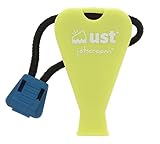
UST JetScream Floating Emergency Whistle
The UST JetScream is a practical life-jacket whistle because it includes:
- Floating construction
- A pealess design
- No internal ball that can rust or jam
- Operation when wet
- Loud emergency signaling
- A flat shape that attaches easily to a life jacket
Attach one to every life jacket.
A whistle can be heard farther than the human voice, especially when the person in the water is tired, cold or fighting waves.
Manual Bilge Pump
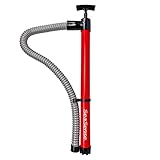
SeaSense Hand Bilge Pump
A manual bilge pump can help remove water from:
- Kayaks
- Canoes
- Dinghies
- Small boats
- Storage compartments
- Boat bilges
Secure the pump where it can be reached quickly. Do not place it somewhere that becomes inaccessible when the boat is taking on water.
Kayakers should practice using the pump and practice re-entering their kayak in controlled conditions.
Emergency equipment you have never practiced using is mostly decorative.
Visual Distress Signal Kit
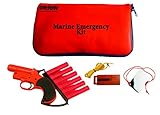
Orion Coastal Alert Launcher Kit
The Orion Coastal Alert Launcher Kit includes:
- Coast Guard-approved day and nighttime aerial distress signals
- Six red aerial signals
- A SOLAS-approved whistle with lanyard
- Signal mirror
- Floating, high-visibility storage case
Pyrotechnic distress signals have expiration dates. Check those dates regularly and replace expired signals.
Store them in a dry, accessible location and read the instructions before leaving the dock. Do not wait until an emergency to figure out which direction the launcher points.
Requirements for visual distress signals vary according to the vessel, operating area, time of operation and applicable regulations. Verify what is legally required for your particular boat and fishing area.
Waterproof First-Aid Kit
WELL-STRONG Waterproof Boat First-Aid Kit
A waterproof first-aid kit should contain supplies for treating common fishing and boating injuries, including:
- Cuts
- Puncture wounds
- Hook injuries
- Minor burns
- Abrasions
- Blisters
- Splinters
- Minor sprains
The WELL-STRONG marine-style kit packages its supplies inside a waterproof roll-top bag suitable for boating and kayaking.
Add any personal medications, allergy treatments and medically necessary items required by members of your party.
Inspect the contents periodically. Replace wet, damaged, opened or expired supplies.
Additional Equipment Worth Carrying
In addition to the specific products above, consider packing:
- A properly fitted Coast Guard-approved life jacket
- A waterproof or water-resistant power bank
- Short charging cables
- Roll-top dry bags
- A waterproof flashlight
- A signal mirror
- A knife or marine line cutter
- A spare paddle
- A paddle leash where appropriate
- A kayak tow line
- A compact emergency blanket
- Bright foul-weather clothing
- Drinking water
- Sunscreen
- A wide-brimmed hat
- An anchor suitable for your vessel and conditions
- A manual bailer
- A waterproof chart or offline map
- Required navigation lights
- Legally required distress signals
Avoid depending entirely on rechargeable equipment. Carry backups that do not depend on the same battery, phone or electrical system.
The Three Purchases I Would Prioritize
For a small boat or kayak, the three highest-priority pieces of equipment are:
- A properly fitted Coast Guard-approved life jacket that is worn throughout the trip
- A floating handheld VHF marine radio such as the Standard Horizon HX210
- A registered Personal Locator Beacon such as the ACR ResQLink 400
The waterproof phone pouch, whistle, life-jacket strobe, bilge pump, visual distress signals and waterproof first-aid kit should follow closely behind.
None of this equipment makes it safe to remain on the water when a squall is approaching.
The best piece of emergency equipment is still an early decision to turn around.
File a Float Plan
Before leaving, tell a reliable person:
- Who is going
- Where you are launching
- Where you plan to fish
- Your expected route
- Your vessel description
- Your vehicle description
- Your expected return time
- When they should contact authorities if you have not checked in
Send them a map pin or route when possible.
You can also share your live phone location, but do not treat cellular location sharing as a substitute for a written float plan.
Then remember the part fishermen sometimes forget: tell your contact when you are safely back.
Otherwise, your fishing buddy may launch a rescue operation while you are sitting at a restaurant eating tacos.
When High Winds and Waves Catch You
The correct response depends on your vessel, position, water depth, wind direction, current, nearby hazards and the experience of the operator.
There is no single maneuver that makes every small boat storm-proof.
The immediate priorities are:
- Put on life jackets immediately if anyone is not already wearing one.
- Contact help early if there is a reasonable chance you may be in danger.
- Give your position, number of people aboard and vessel description.
- Secure loose equipment.
- Keep passengers seated low and near the center of the boat.
- Reduce speed enough to maintain control.
- Avoid taking steep waves directly over the side.
- Keep the bow at a safe angle to the waves when conditions permit.
- Head toward the nearest genuinely safe shelter—not necessarily your original ramp.
- Keep a bilge pump, bailer or kayak pump ready.
Do not have passengers suddenly move toward one side of a small boat. A rapid weight shift can make an already unstable situation worse.
Do not blindly race toward shore at full throttle. Excessive speed in steep, closely spaced waves can cause severe pounding, loss of control, bow stuffing, equipment failure or injury.
Operate at the speed necessary to maintain steerage and control.
Special Considerations for Kayakers
High wind can make progress in a kayak nearly impossible, especially when paddling against it.
Kayakers should:
- Stay within practical reach of a safe shoreline
- Avoid large open-water crossings when storms are possible
- Wear a life jacket at all times
- Keep the VHF radio and PLB attached to the life jacket
- Secure the paddle appropriately
- Carry a pump or bailer
- Carry a whistle
- Practice capsize recovery and re-entry
- Dress for the water temperature, not just the air temperature
- Leave before wind and waves become difficult
Do not assume that because you paddled away from the ramp in 30 minutes, you can paddle back in 30 minutes.
A headwind can turn an easy return trip into an exhausting or impossible one.
If capsized, stay with the kayak or boat when it is safe to do so. A vessel is generally easier for rescuers to see than a person’s head among rough waves.
When to Call for Help
Do not wait until the boat is sinking to make a distress call.
Use marine VHF Channel 16 when you face grave and immediate danger. Depending on the seriousness of the situation, your call may begin with:
- MAYDAY for grave and immediate danger
- PAN-PAN for an urgent situation that is serious but not yet immediately life-threatening
Provide:
- Your vessel name or description
- Your position
- The nature of the emergency
- The number of people aboard
- Injuries or medical problems
- Your intended actions
Speak clearly and repeat the information when requested.
Early communication gives rescuers more time and more options.
The Final Rule
Weather applications, radios, strobes and emergency beacons are valuable, but none of them can make a dangerous decision safe.
- When the forecast looks questionable, postpone the trip.
- When the sky begins changing, leave early.
- When your instincts say conditions are deteriorating, listen to them.
- A fisherman who turns around may lose an hour of fishing.
- A fisherman who waits too long may lose considerably more.
The Gulf will still be there tomorrow. Make sure you are too.
Disclosure: As an Amazon Associate, I earn from qualifying purchases. I may receive a small commission when products are purchased through links in this article, at no additional cost to you.